


Friendshoring and the New Financial Map of Global Trade


Geopolitical tensions and supply chain interruptions have greatly changed how companies operate nowadays. Governments and companies have adopted two critical strategies—nearshoring and friendshoring—as a result of the ongoing trade conflict between the United States and China as well as wars like those between Russia and Ukraine. These trends not only reveal the transformation of international trade but also the rising dominance of governments and the increasing intermingling of finance and geopolitics.
The Rise and Decline of Offshoring
Since the 1980s, offshoring has been the most used approach, which involves moving manufacturing to other countries to take advantage of lower labour costs, more lenient regulations, and weaker supervision. This method has been a crucial component of GVCs (Global Value Chains) over the past thirty years and has grown with the globalization of production.
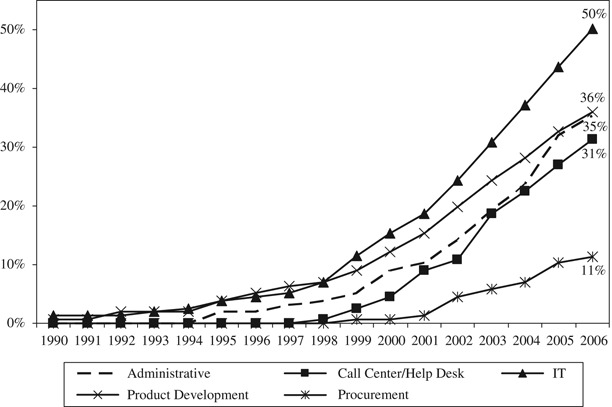
Offshoring, once thought of as an easy approach to boost efficiency, is now hampered by current political tensions, so companies are investigating substitutes such as nearshoring. Moving manufacturing facilities to surrounding countries defines this approach. Many companies have relocated their manufacturing to nations like Mexico because of rising economic rivalry between China and the United States that started to gain momentum in 2016. Moving to these closer locations enables companies to still profit from some of the cost benefits of offshoring while also providing greater political stability and physical closeness. This change helps save transport costs and lowers the risks of doing business in politically unstable or hostile nations.
The Shift to Friendshoring
Friendshoring takes a more openly political stance, while nearshoring mainly aims to improve logistical efficiency and preserve regional stability. In friendshoring, businesses opt to move their operations not only to nearby nations but also to those regarded as politically or commercially friendly partners. Reducing reliance on enemy countries helps to improve supply chain security. For example, growing worries about China have prompted the United States to encourage companies to relocate significant production to nations like India and Vietnam.

Friendshoring is reshaping global trade geopolitically by establishing fresh economic blocs that give political harmony priority above merely market efficiency. Countries are reevaluating their trade partners not just on the basis of price but also on the basis of shared regulatory standards, ideological affinities, and diplomatic ties as trust becomes an increasingly important consideration in supply chain decisions.
This trend is very obvious in the strengthening of alliances like the U. S.-EU bloc and in the expanding Indo-Pacific ties. In contrast to the prior offshore model, which allowed production to be established almost everywhere, friendshoring suggests a more fractured globalisation in which economic interdependence is seen through the prism of security concerns and strategic allegiance beyond the mere exchange of capital and goods, trade today includes influence, trust, and ideas in this changing environment.

The Future of Global Production
Looking ahead, friendshoring and nearshoring are expected to significantly affect worldwide production processes. Because companies are placing emphasis on resilience above only cost-efficiency, relocating activities nearer to home or inside reliable political coalitions is imperative. Not only a trend, this transformation is increasingly critical. As technical advancements like automation and artificial intelligence (AI) lower the cost benefits of remote outsourcing, this change is projected to quicken.
Moreover, influencing corporate choices will be trade wars, political instability, and inconsistent laws among other elements. Even if we may not see a complete comeback to protectionism, we are entering a new age of selective interdependence when economic globalisation is seen through the lenses of trust and security.
To stay competitive and politically pertinent in the years to come, companies must adapt to this evolving industrial environment, therefore altering the geopolitical financial map.


Comments